Get Directions

The Science Behind Tooth Decay and How It Develops Over Time
Tooth decay is a process that can be sneaky until it’s too late. Understanding how tooth decay develops and why it occurs is key to preventing it. This blog dives into the science behind tooth decay, examining how it begins, progresses, and the role that your diet, oral hygiene habits, and even genetics play in its development.
Whether you’ve had a cavity before or just want to know more about how to protect your teeth, this guide explains the ins and outs of tooth decay in a way that’s easy to understand. Armed with this knowledge, you can take proactive steps to ensure a healthier, stronger smile.
What Is Tooth Decay?
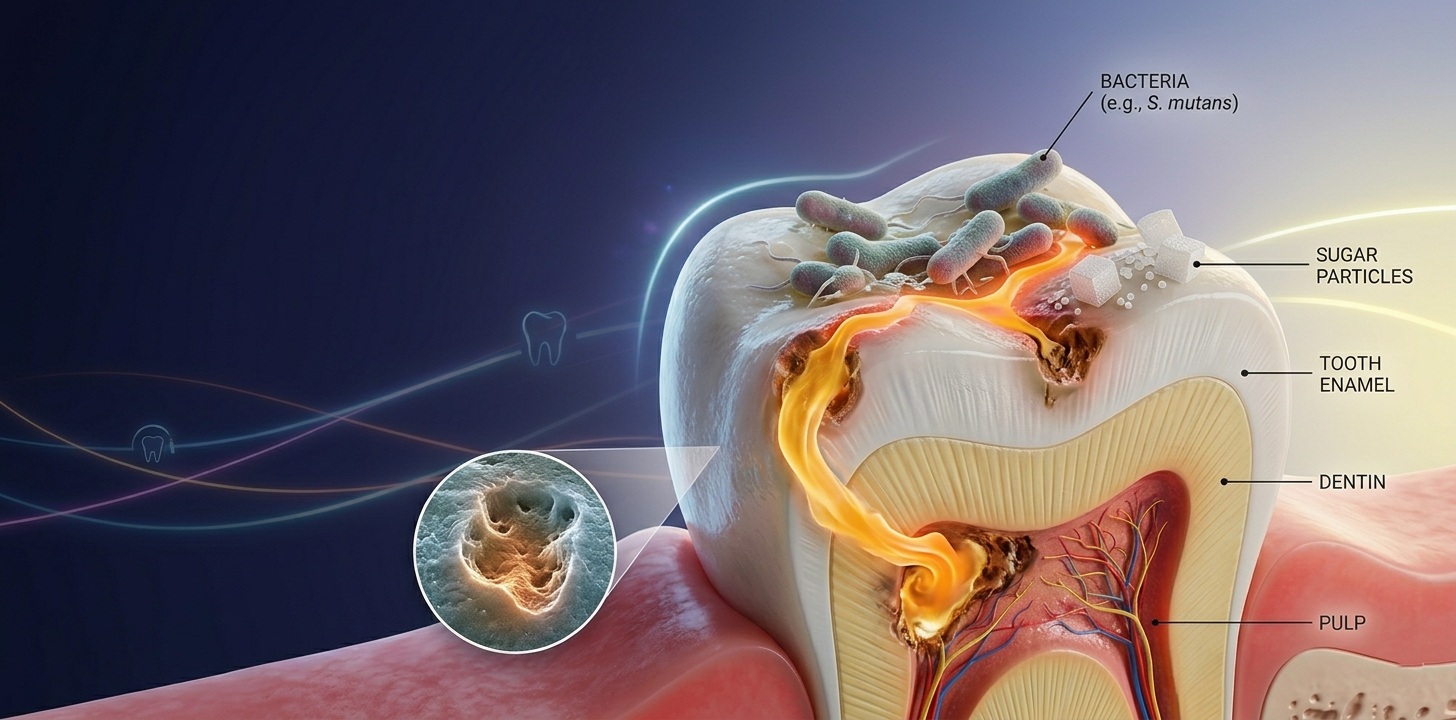
At its core, tooth decay is the destruction of the tooth enamel, the outermost layer of your teeth. Enamel is incredibly hard, but it can wear down when exposed to certain factors. The primary cause of tooth decay is the buildup of plaque—a sticky film of bacteria that forms on your teeth after eating or drinking.
Plaque contains harmful bacteria that feed on the sugars and starches in the food you consume. These bacteria produce acids that gradually erode your enamel. Once enamel is worn away, the softer tissue underneath, known as the dentin, becomes exposed. If left untreated, decay can reach the pulp, which contains nerves and blood vessels, leading to pain and potential tooth loss.
How Does Tooth Decay Develop Over Time?
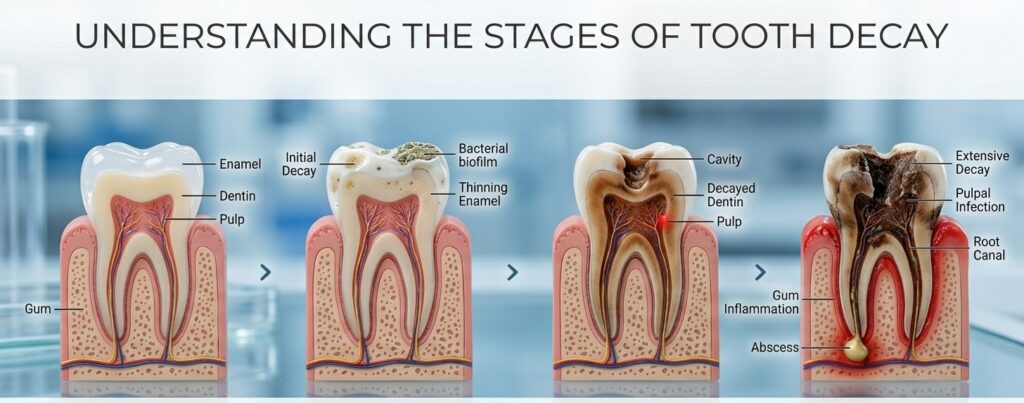
Tooth decay doesn’t happen overnight. It’s a gradual process that typically occurs in stages:
Stage 1: Plaque Formation and Acid Attack
Every time you eat or drink, the bacteria in your mouth go to work, feeding on sugars and starches. As they break these down, they produce acids that begin to erode the tooth enamel. If plaque isn’t removed through regular brushing, it hardens into tartar, which only intensifies the damage.
Stage 2: White Spots (Early Decay)
In the early stages, enamel starts to lose minerals due to acid exposure. You might notice white spots on the surface of your teeth. While this stage is reversible with good oral hygiene, if left unchecked, it can lead to further damage.
Stage 3: Cavities Form (Advanced Decay)
If the enamel continues to deteriorate, cavities (holes) begin to form. At this point, the damage is irreversible. You’ll likely need restorative dentistry services, such as fillings, to address the cavity and prevent further infection.
Stage 4: Deep Decay and Infection
Once the cavity reaches the dentin (the softer layer beneath the enamel), decay accelerates. You may begin to feel tooth sensitivity or pain, especially when consuming hot, cold, or sugary foods. If the decay reaches the pulp, an infection could set in, necessitating more serious treatment, such as a root canal.
Stage 5: Tooth Loss
If the decay is left untreated for too long, the tooth may eventually become so damaged that it must be extracted. This is often the last resort when other treatments have failed.
What Causes Tooth Decay?
Several factors contribute to tooth decay. Here are some of the most common causes:
- Poor Oral Hygiene: Failing to brush and floss regularly allows plaque and bacteria to build up on your teeth. Over time, this leads to enamel erosion and cavities.
- Diet: A diet high in sugary or acidic foods and drinks feeds the bacteria in your mouth, increasing the likelihood of decay. Regularly consuming soda, candy, or even acidic fruits without proper care can increase your risk of cavities.
- Dry Mouth: Saliva is essential for neutralizing acids in the mouth and for remineralizing enamel. When you have a dry mouth, your teeth are more vulnerable to decay.
- Genetics: Some people are more prone to tooth decay due to genetic factors, such as having weaker enamel or a higher bacterial load in their mouths.
- Age: Tooth decay can affect people of all ages, but older adults are more susceptible due to factors such as gum recession and enamel wear over time.
- Medications: Certain medications can reduce salivary production, leading to dry mouth and an increased risk of decay.

How Can You Prevent Tooth Decay?
Now that you understand how tooth decay develops, it’s important to know how to protect your teeth from it. Here are some essential tips to maintain good oral health and prevent decay:
Brush and Floss Regularly
Brush your teeth at least twice a day and floss once a day to remove plaque and food particles. Use fluoride toothpaste to strengthen your enamel and prevent decay. Be sure to brush for at least two minutes, and use a soft-bristled toothbrush to avoid damaging your enamel.
Avoid Sugary Foods and Drinks
Limit your intake of sugary snacks, sodas, and other sugary drinks, as they feed harmful bacteria. If you do indulge, rinse your mouth with water afterward to help neutralize acids.
Drink Plenty of Water
Drinking water helps wash away food particles and bacteria from your teeth. If you live in Edmonton, tap water is fluoridated, which can further strengthen your enamel and prevent decay.
Visit Your Dentist Regularly
Routine dental checkups are crucial for early detection of decay. Your dentist can spot early signs of tooth decay before they become serious, giving you the chance to treat them early with preventive measures like fluoride treatments or dental sealants.
Undergo Fluoride Treatments
If you’re at a higher risk of tooth decay, fluoride treatments may be recommended. Fluoride helps remineralize enamel and makes your teeth more resistant to decay.
Use Dental Sealants
Dental sealants are a protective coating applied to the chewing surfaces of your molars. These sealants act as a barrier against plaque and bacteria, reducing the likelihood of cavities forming in these hard-to-reach areas.
Tooth decay is a gradual process, but with the right knowledge and preventive measures, it’s entirely manageable. By brushing and flossing regularly, eating a balanced diet, and visiting your dentist in Fresh Dental Edmonton, you can help protect your teeth from decay and maintain a healthy smile for years to come.
People Also Ask
What is the best way to reverse early-stage tooth decay?
Early decay can often be reversed with a fluoride treatment. Maintaining good oral hygiene and reducing sugar intake also helps remineralize the enamel.
Can tooth decay lead to gum disease?
Yes, untreated tooth decay can lead to gum infection and periodontal disease, which can affect both your gums and teeth.
Are there any foods that help fight tooth decay?
Foods rich in calcium, like cheese, yogurt, and leafy greens, help strengthen teeth. Apples and carrots also stimulate saliva production, helping neutralize acids in the mouth.
Can a root canal save a tooth with advanced decay?
Yes, a root canal can save a tooth with significant decay by removing the infected pulp, cleaning the root canals, and sealing the tooth.